
Gialova Lagoon, also known as Divari, is located north of Pylos, beside Navarino Bay and very close to the famous Voidokilia Beach. It is one of the most important wetlands in southern Greece, offering a distinctive natural landscape where the sea, sand dunes, and wetland habitats coexist within a relatively small area.
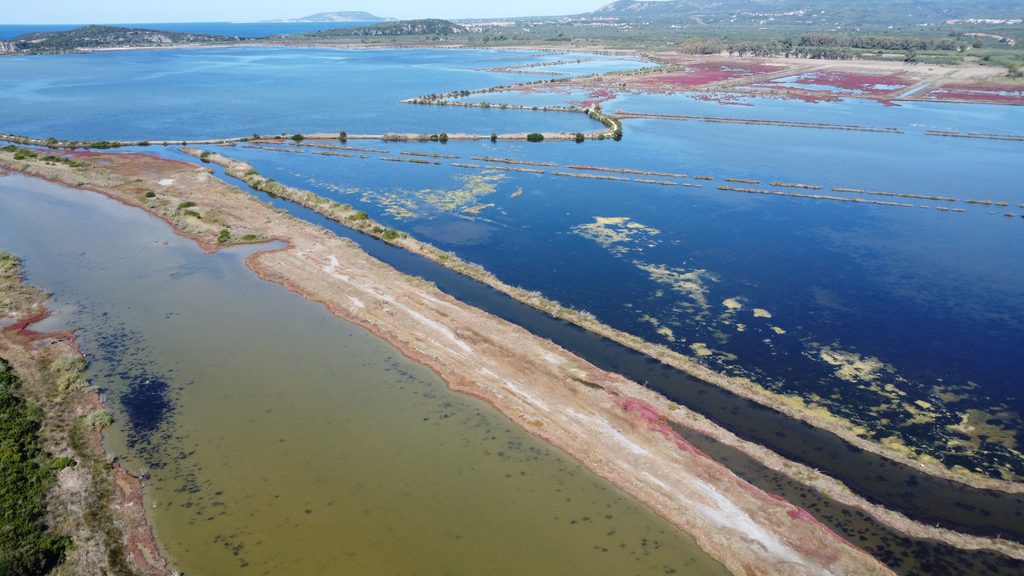
Beyond its scenic beauty, the lagoon is of great ecological importance, providing feeding grounds, resting areas, and shelter for numerous bird species, particularly during migration.
The Natural Landscape
The lagoon stretches behind a narrow strip of land separating it from Navarino Bay. Voidokilia Beach lies to the north, while the hill of Palaiokastro rises to the west.
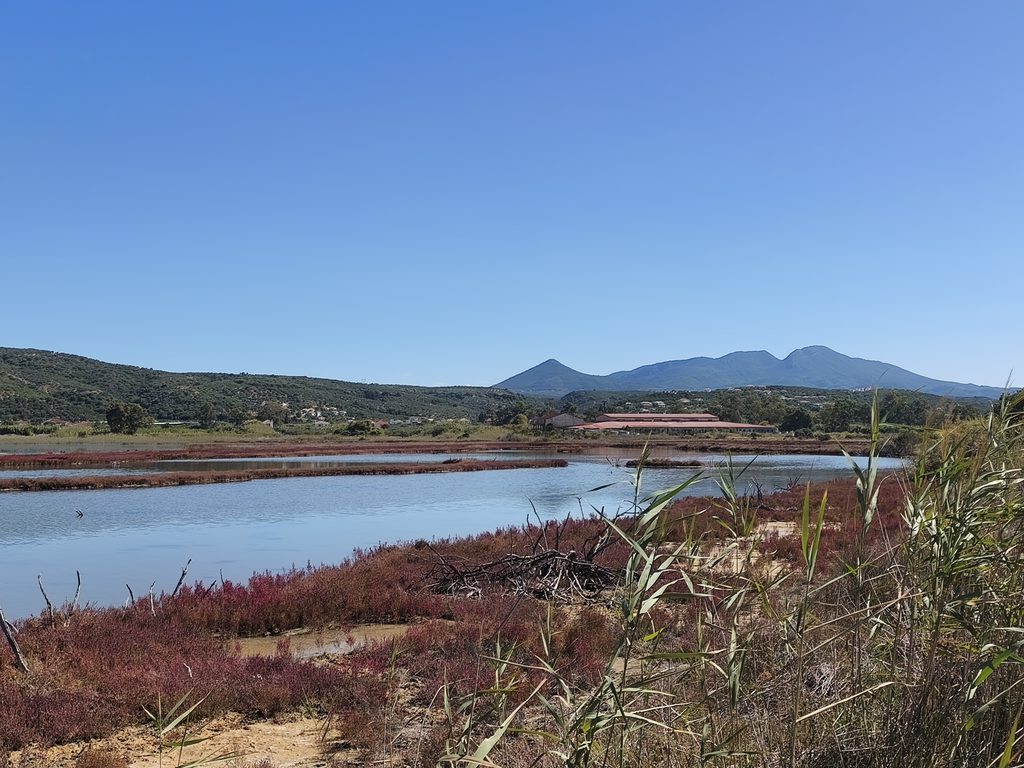
The landscape is characterized by shallow waters, salt marshes, sand dunes, and low Mediterranean vegetation. Depending on the season and water levels, the appearance of the lagoon changes, revealing different colors and areas of wetland vegetation.
A Paradise for Birdwatchers
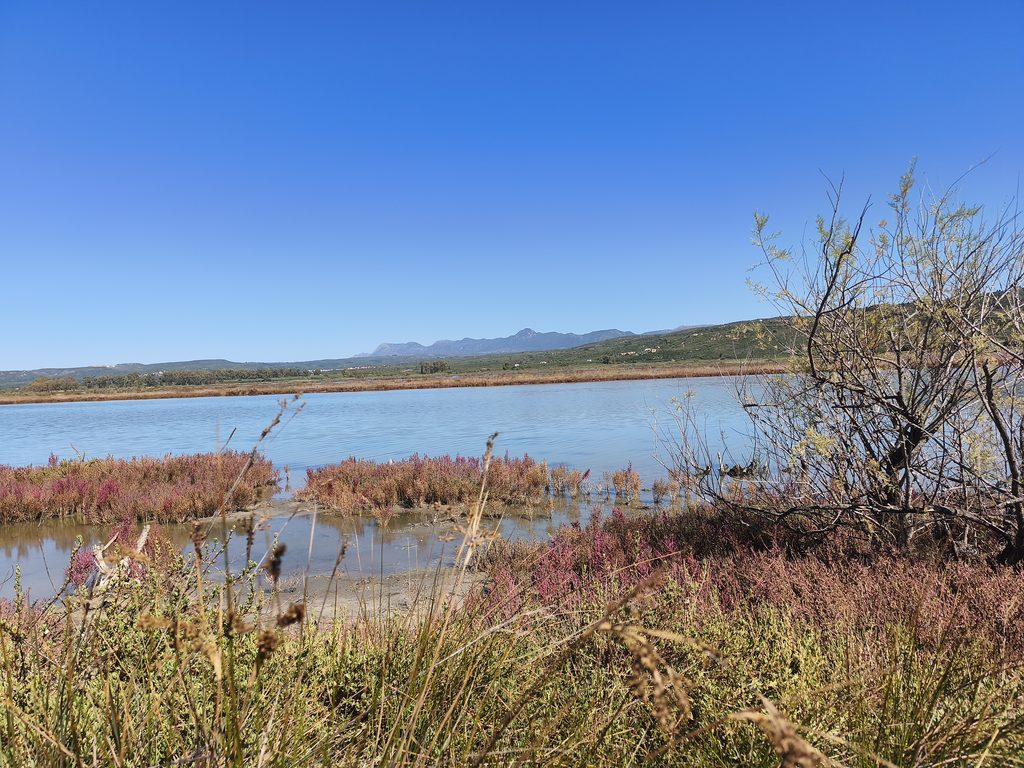
Gialova Lagoon is an important stopover for migratory birds traveling between Europe and Africa.
Visitors may spot herons, cormorants, wading birds, and various other waterbirds. Spring and autumn are particularly rewarding seasons for birdwatching, as these are the main migration periods.
For those interested in wildlife photography, binoculars or a telephoto lens can make the visit even more enjoyable.
The African Chameleon
One of the most unusual species associated with the area is the African chameleon (Chamaeleo africanus), a rare reptile historically recorded around Gialova Lagoon.
The species is one of the reasons the area has attracted particular conservation interest. Chameleons are difficult to spot, as they usually remain hidden among the vegetation.
Visitors should avoid disturbing or attempting to handle any wild animals.
Nature Observation and Low-Impact Activities
Gialova Lagoon is best suited to birdwatching, nature photography, walking, and cycling along existing roads and paths.
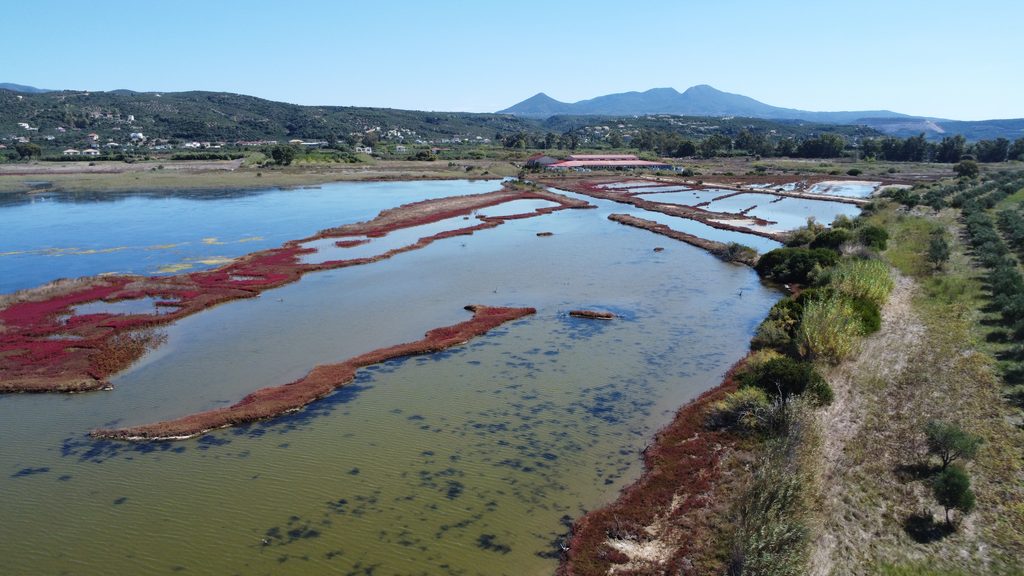
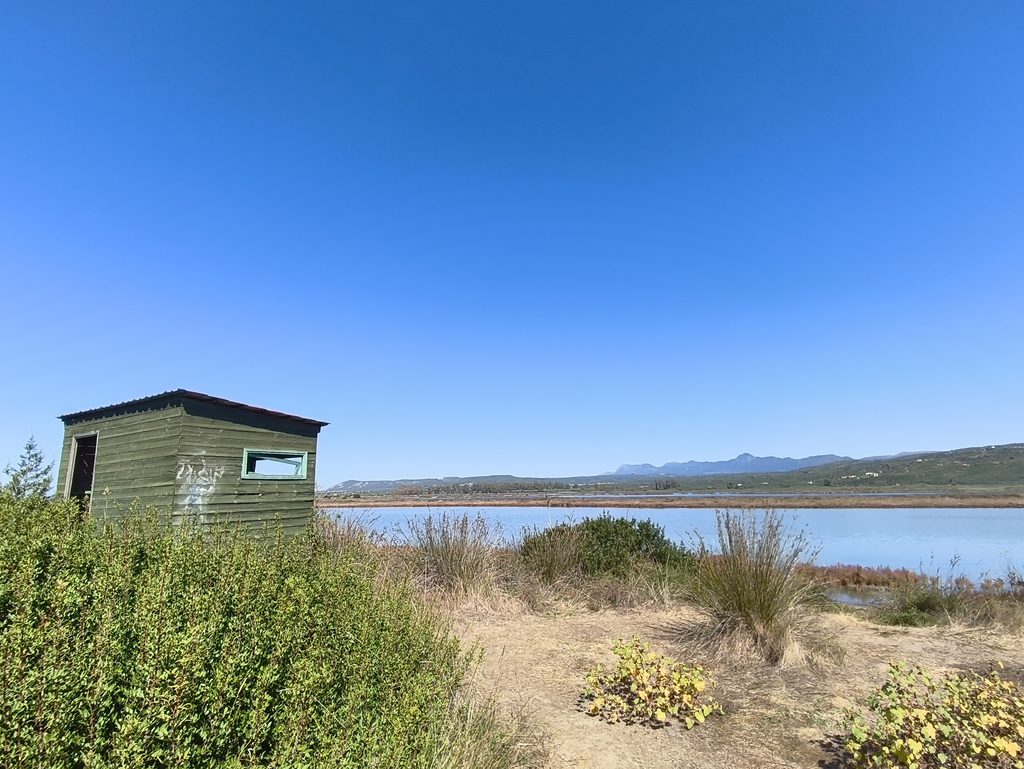
There is a birdwatching hide in the area, where visitors can observe the wetland’s birdlife. Walking routes are limited, and there are few tourist facilities, helping preserve the area’s natural character.
A visit does not require any special activity. Even a short walk, with stops to observe and photograph the surroundings, is enough to appreciate the lagoon’s distinctive environment.
As this is a protected area, visitors should stay on existing roads and paths and avoid disturbing wildlife.
How to Get to Gialova Lagoon
Gialova Lagoon lies between the village of Gialova and Voidokilia Beach, a few kilometers north of Pylos.
One common approach is via the road from Gialova towards Divari, which leads to Golden Beach (Chrysi Akti) and the Palaiokastro area.
The lagoon can be seen from several points around the area. However, not all sections of its shoreline are suitable for walking, as some areas are wet, marshy, or environmentally sensitive.
What Else to See Nearby
Gialova Lagoon is surrounded by some of the most interesting attractions in western Messinia.
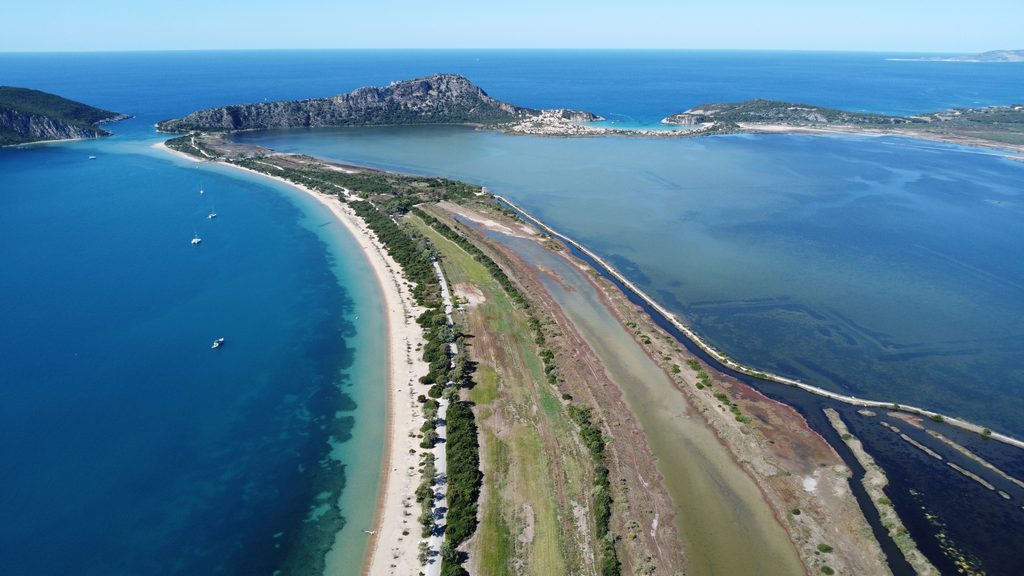
Voidokilia Beach, famous for its distinctive horseshoe shape, lies just north of the wetland. On Palaiokastro Hill stand the ruins of the medieval castle of Pylos, while Nestor’s Cave is located further down the hillside.
To the south, the villages of Gialova and Pylos offer places to eat, enjoy a stroll, and stay overnight.
Useful Tips
- Visit in spring or autumn if birdwatching is your main interest.
- Bring binoculars if you have them.
- Avoid leaving established roads and paths.
- Do not approach nests or disturb wildlife.
- During summer, visit in the morning or late afternoon and bring drinking water.
Gialova Lagoon is one of Messinia’s most distinctive natural landscapes. Unlike the region’s busy beaches, its appeal lies in the tranquility of the wetland, the opportunity to observe wildlife, and the chance to discover an ecosystem worth protecting.