
Voidokilia is undoubtedly one of the most famous and photographed beaches in Messinia and one of Greece’s most distinctive coastal landscapes. Located near Gialova, north of Navarino Bay, it is known for its almost perfect semicircular shape, golden sand, and turquoise waters.
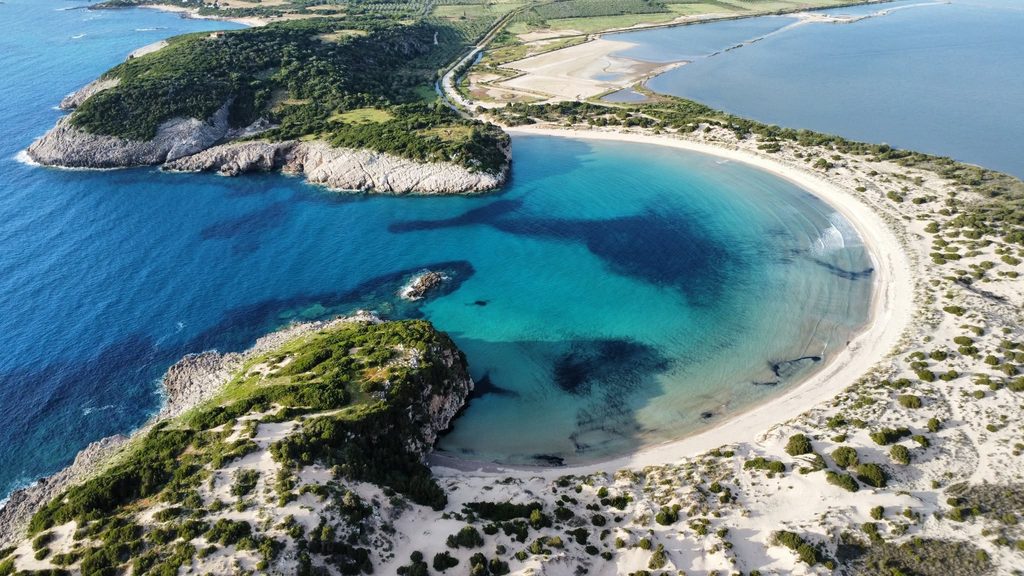
From above, the beach resembles a giant natural horseshoe, with two rocky headlands forming a narrow opening towards the Ionian Sea. Behind the sandy shore lies Gialova Lagoon, creating a remarkable landscape where the sea, sand dunes, wetlands, and surrounding hills come together.
The Beach
Voidokilia Beach has fine sand and relatively shallow waters, particularly close to the shore. The seabed is mostly sandy, and the water is often exceptionally clear.
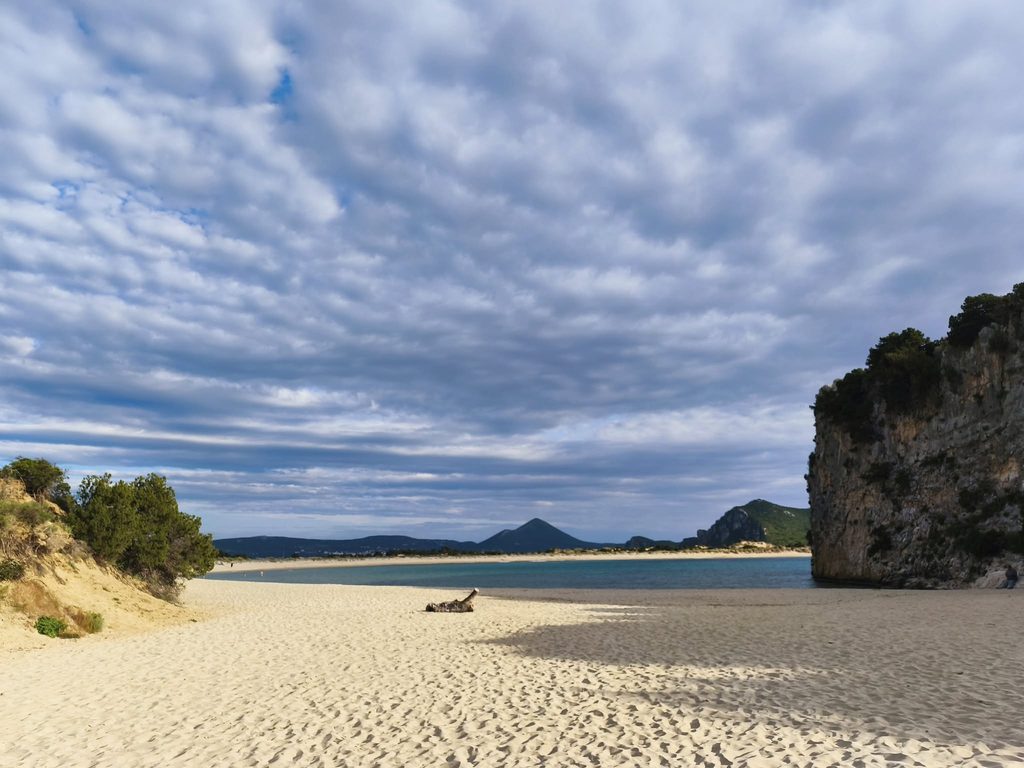
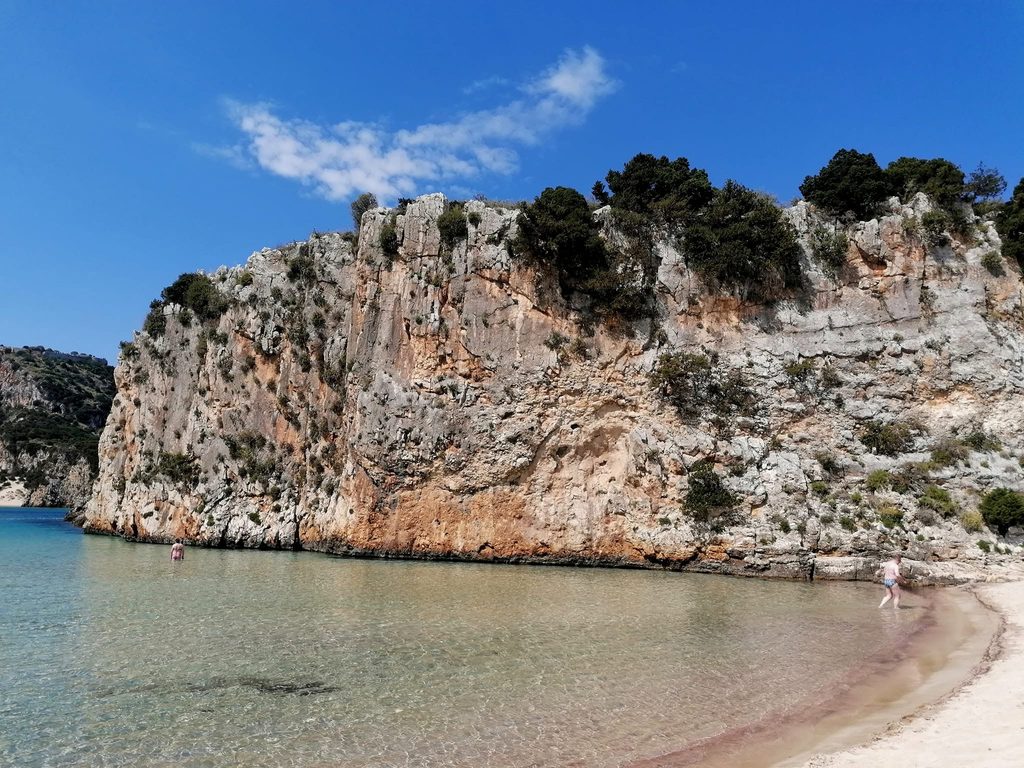
The beach is unorganized and has largely preserved its natural character. There are no sunbeds, umbrellas, or shops on the beach, so visitors should bring everything they need for their stay.
During the summer, especially in July and August, Voidokilia attracts large numbers of visitors. Those looking for a quieter experience may prefer to visit early in the morning or outside the peak tourist season.
How to Get to Voidokilia Beach
The most common way to reach Voidokilia is by car via Petrochori, north of Gialova. From there, follow the road towards the beach, which leads close to its northern end.
After parking, a short walk takes you to the sandy shore.
Parking can become more difficult during the busy summer months due to the large number of visitors.
Palaiokastro Castle and Nestor’s Cave
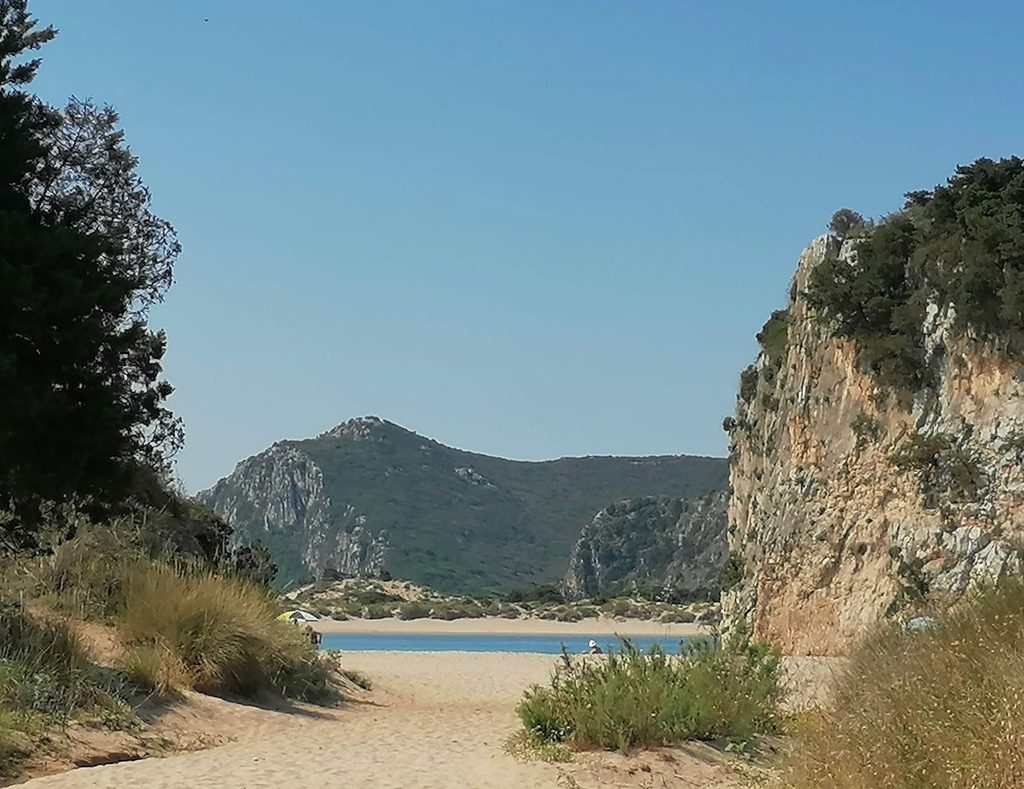
At the southern end of Voidokilia Beach rises the hill of Palaiokastro. At its summit stand the ruins of the medieval castle of Pylos, while Nestor’s Cave is located further down the hillside.
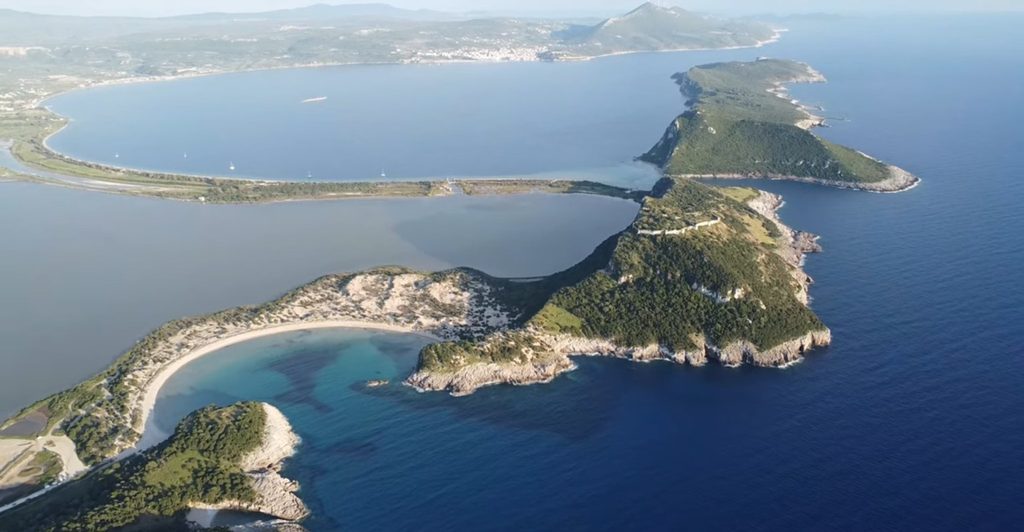
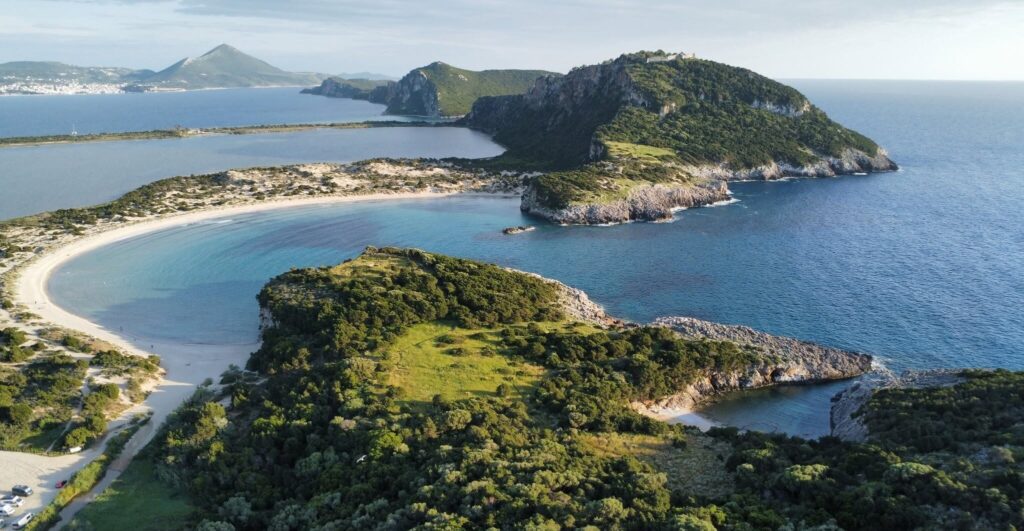
The views from the surrounding heights are particularly impressive, revealing the beach’s distinctive horseshoe shape and the lagoon stretching out behind it.
For hiking enthusiasts, a visit to Palaiokastro Castle can be combined with a swim at Voidokilia. The trail leading from the beach towards Nestor’s Cave and the castle is steep and rocky in places, so extra care is needed.
Gialova Lagoon
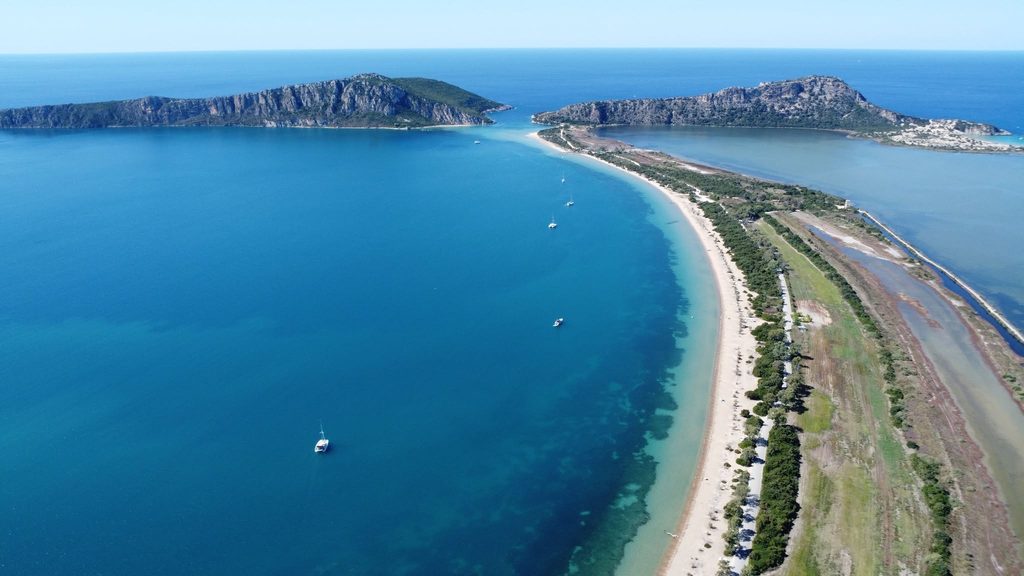
Just behind Voidokilia Beach lies Gialova Lagoon, also known as Divari. It is an important wetland in the western Peloponnese, home to a rich variety of bird species and an ecosystem of considerable ecological value.
The narrow strip of sand separating the lagoon from the sea is one of the landscape’s most distinctive features.
What Else to See Nearby
A short distance from Voidokilia is Glossa Beach, a small and unusual cove with a completely different character.
Further south lie Gialova and Pylos, offering plenty of options for dining, sightseeing, and accommodation. The area is ideal for combining a visit to Voidokilia with a wider exploration of western Messinia.
Useful Tips
- Bring drinking water and a beach umbrella, as there are no organized facilities on the beach.
- Visit early in the morning for a quieter experience, especially during summer.
- Avoid hiking up to Palaiokastro Castle during the hottest hours of the day.
- Respect the protected natural environment and avoid driving or parking on the sand dunes.
Voidokilia is much more than a beautiful place to swim. It is a remarkable natural landscape where the sea, the lagoon, and historical landmarks come together within a relatively small area, offering plenty of opportunities for exploration.