
Getting to Mila Castle
As we leave the Corinth–Kalamata motorway shortly after the Tsakona Bridge and follow the local road towards Kalo Nero, Mila Castle comes into view near the village of Vasiliko, standing on top of a low hill to our left.
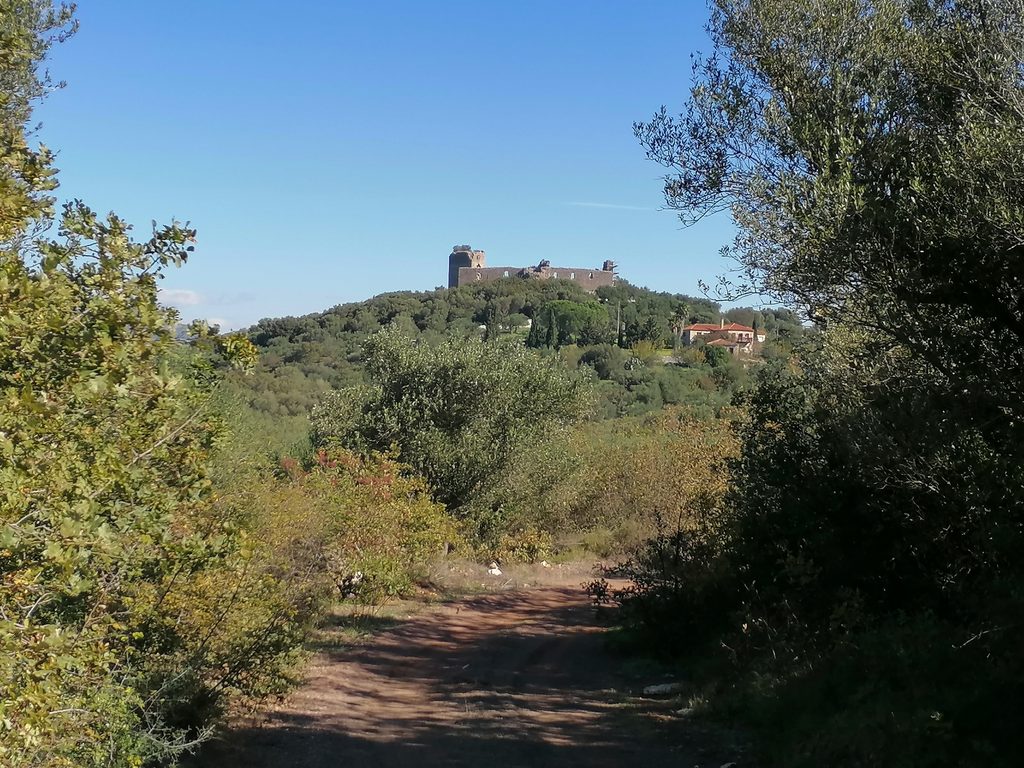
To get there by car, turn towards the village of Mila and continue to the small settlement of Kastro along a paved local road. You can drive to within approximately 300 metres of the castle entrance, which lies at the top of the settlement.
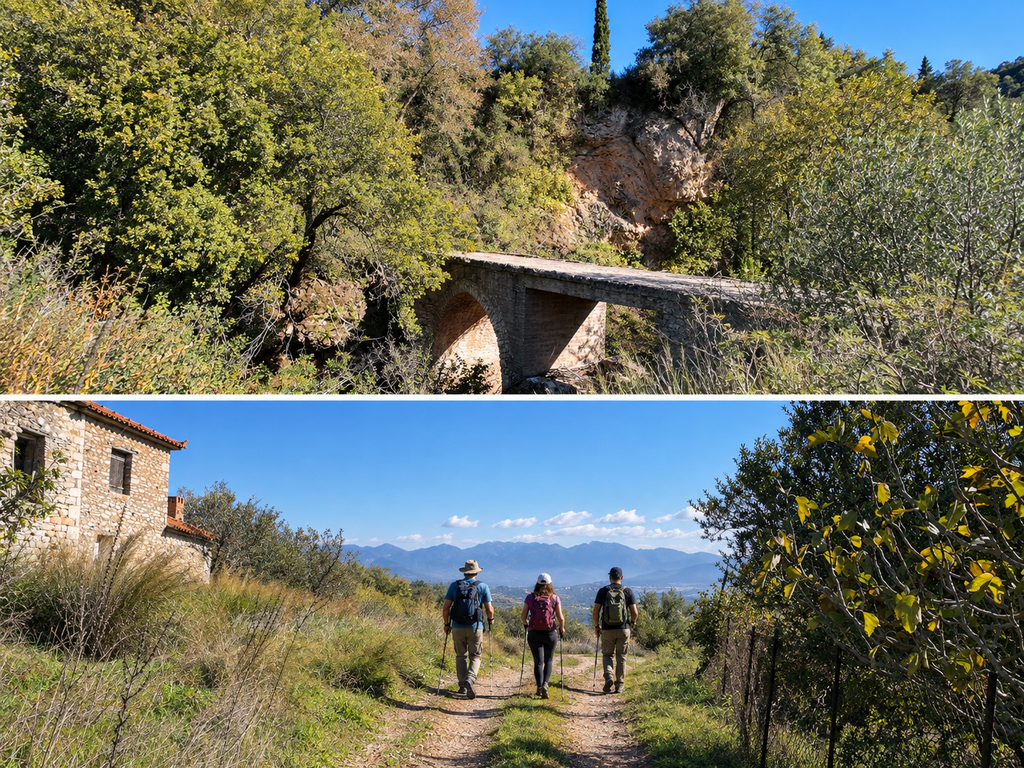
Alternatively, if you enjoy walking, you can approach the castle on foot from Vasiliko. Leave your car in the village and follow the dirt road through olive groves and Mediterranean vegetation. The walk is easy and pleasant and takes approximately 45–60 minutes, depending on your pace.
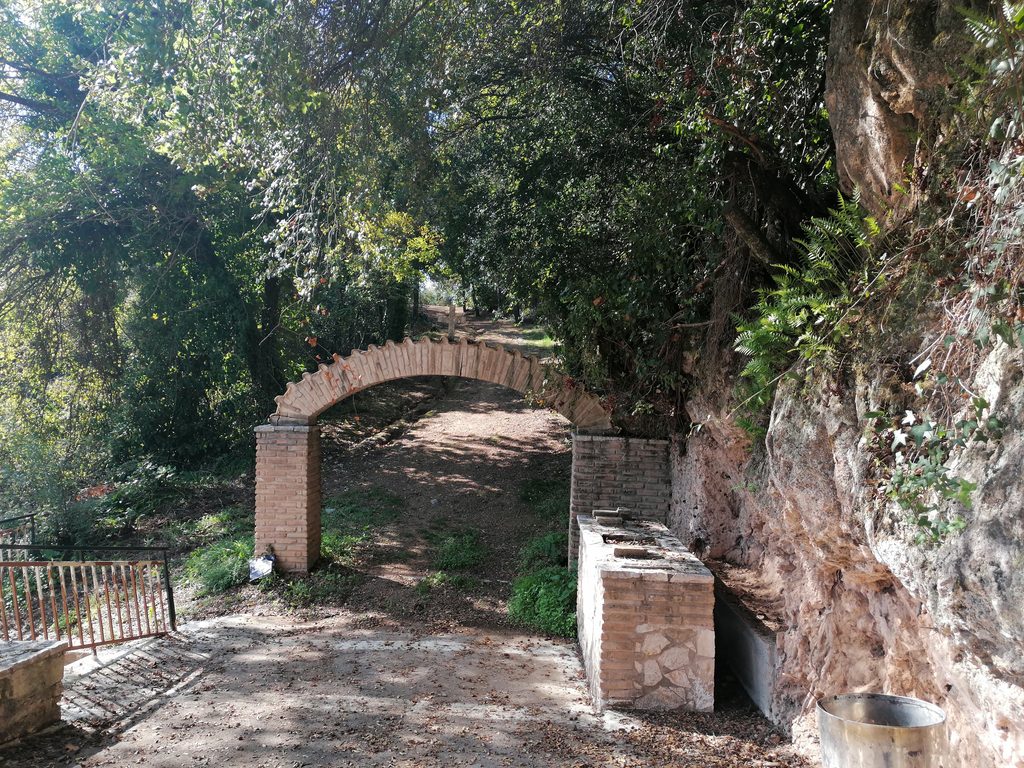
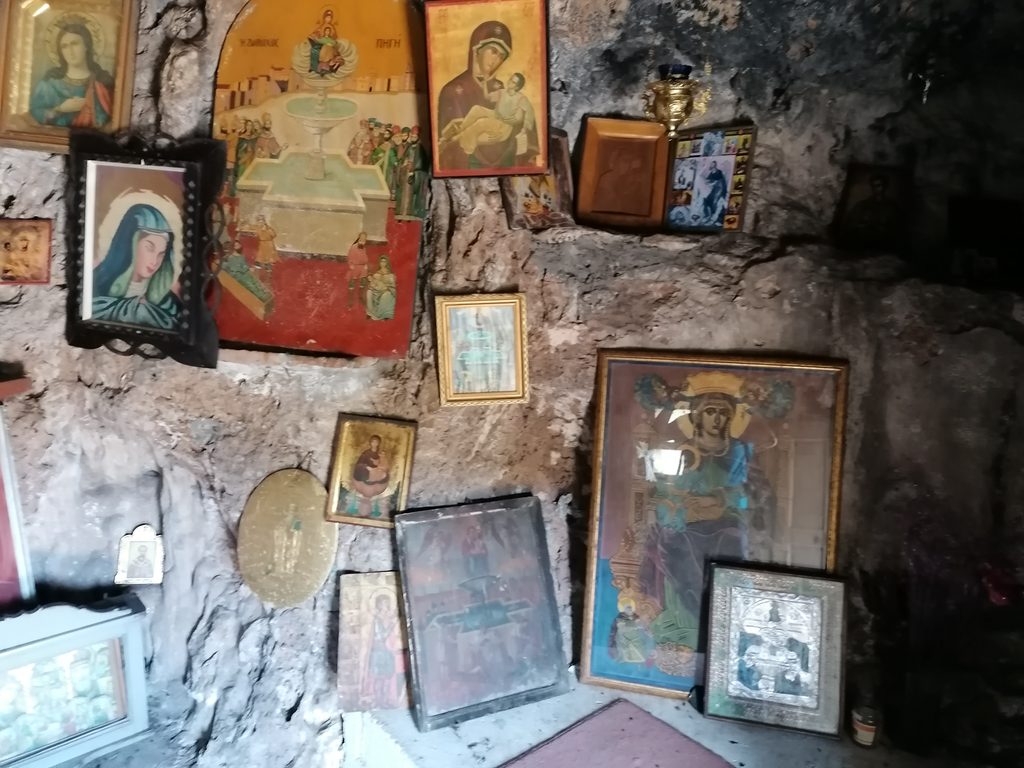
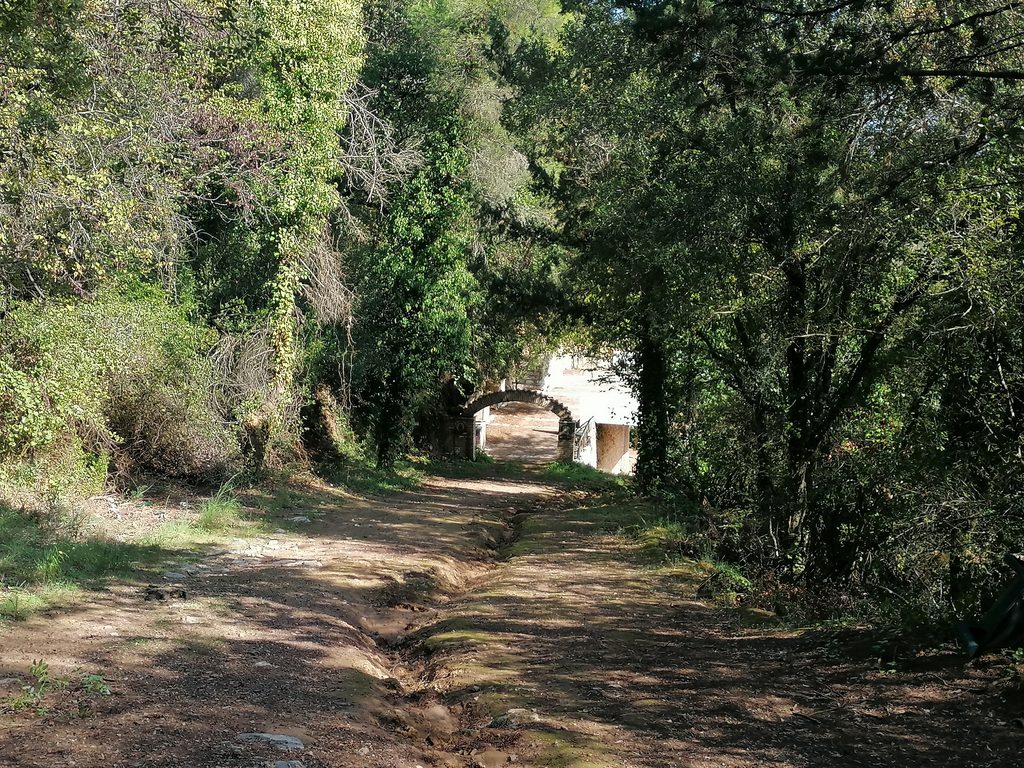
A short detour to Vrachopanagitsa is well worth making along the way. This tiny chapel is built into a natural rock formation, surrounded by dense vegetation and running water, making it one of the most interesting spots along the route.
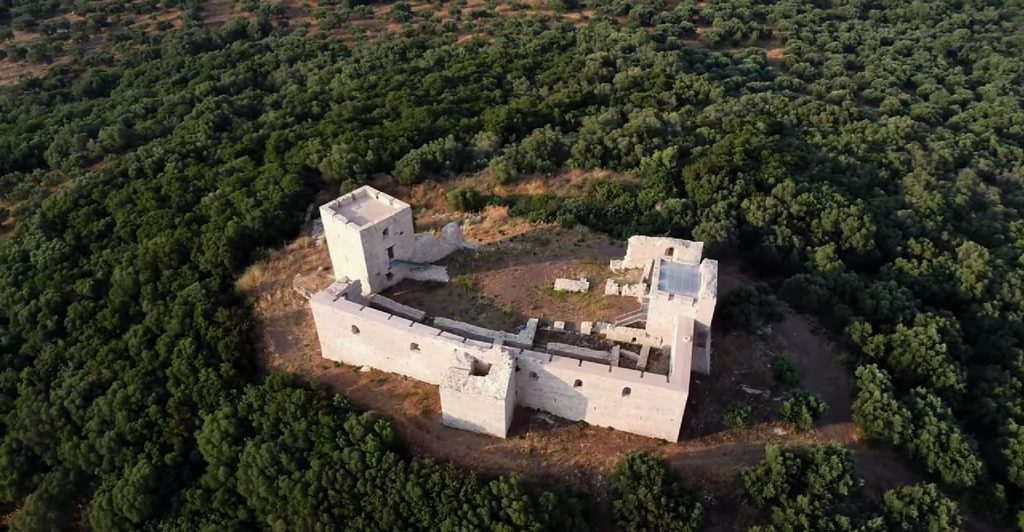
Mila Castle stands at the highest point of the settlement of Kastro. Just a few metres before reaching its entrance, look out for an old stone-paved threshing floor.
A little history
Mila Castle is not particularly well known to the wider public. It is a medieval stronghold built in a strategic position overlooking the northern part of the Messenian plain, the mountain passes towards Arcadia and the old route towards Kyparissia.
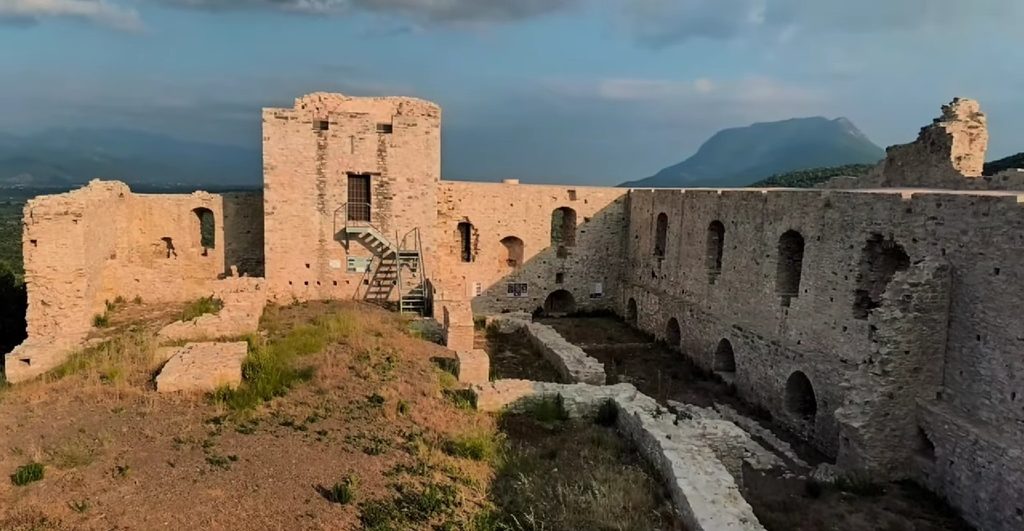
The castle belongs to a series of smaller fortifications established by the Franks in important locations, both to control medieval routes and to strengthen the local authority of the Frankish rulers.
It has been proposed that Mila Castle can be identified with the “New Castle” (Châteauneuf) mentioned in medieval sources and later in the Chronicle of the Morea, referring to events in the late 13th century. Its construction has been associated with efforts by the Franks to reinforce their defences against increasing Byzantine pressure in the Despotate of the Morea.
During this period, Byzantine forces repeatedly raided the Messenian plain, using the castle of Gardiki in Arcadia as one of their bases.
Mila Castle continued to be used during the Ottoman period. Its use by the Ottomans is also mentioned by the French architect and archaeologist Abel Blouet, who visited the area during the French Scientific Expedition to the Morea in the 19th century. The castle is believed to have been abandoned in 1825.
Inside the castle
Mila Castle has two concentric defensive enclosures. The inner enclosure was reinforced by three large four-sided towers, while buildings that probably served various purposes once occupied the inner courtyard. A chapel also existed within the fortified complex.
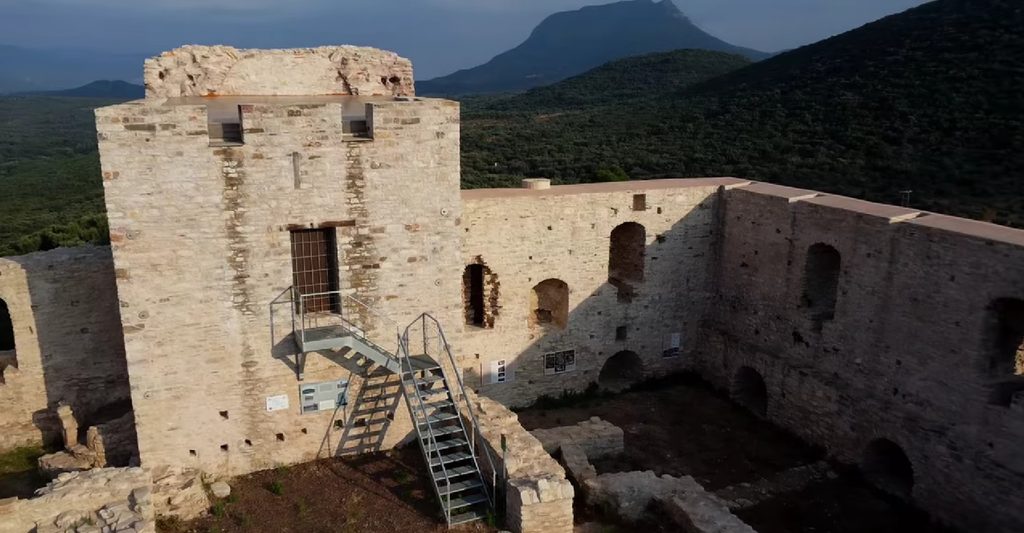
The layout of the castle is particularly interesting because it does not appear to have been designed exclusively for military use. Its architecture has been associated with the castle residences of Western Europe, suggesting that it may also have served as the residence of a local Frankish feudal lord.
Parts of the castle’s everyday infrastructure can still be identified in the surviving walls, including loopholes, fireplaces, drainage channels and a cesspit incorporated into the thickness of the walls.
The restoration of Mila Castle
For many years, the castle remained in poor condition. In March 2020, an extensive restoration and conservation project was launched by the Ephorate of Antiquities of Messinia, with a budget of €450,000 funded through the Peloponnese Regional Operational Programme.
The works included the stabilisation and restoration of walls and towers, protection of the surviving structures and improvements to the surrounding area so that the monument could be safely visited.
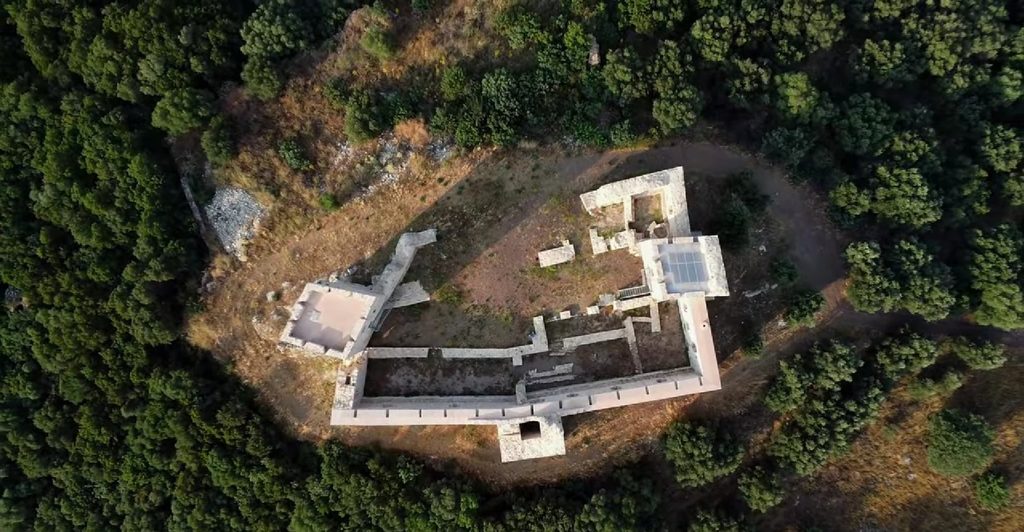
Today, the castle looks very different from the condition it was in before the restoration. The photographs and video on this page show both its earlier appearance and the restored monument as it stood in 2025.
The view from the castle
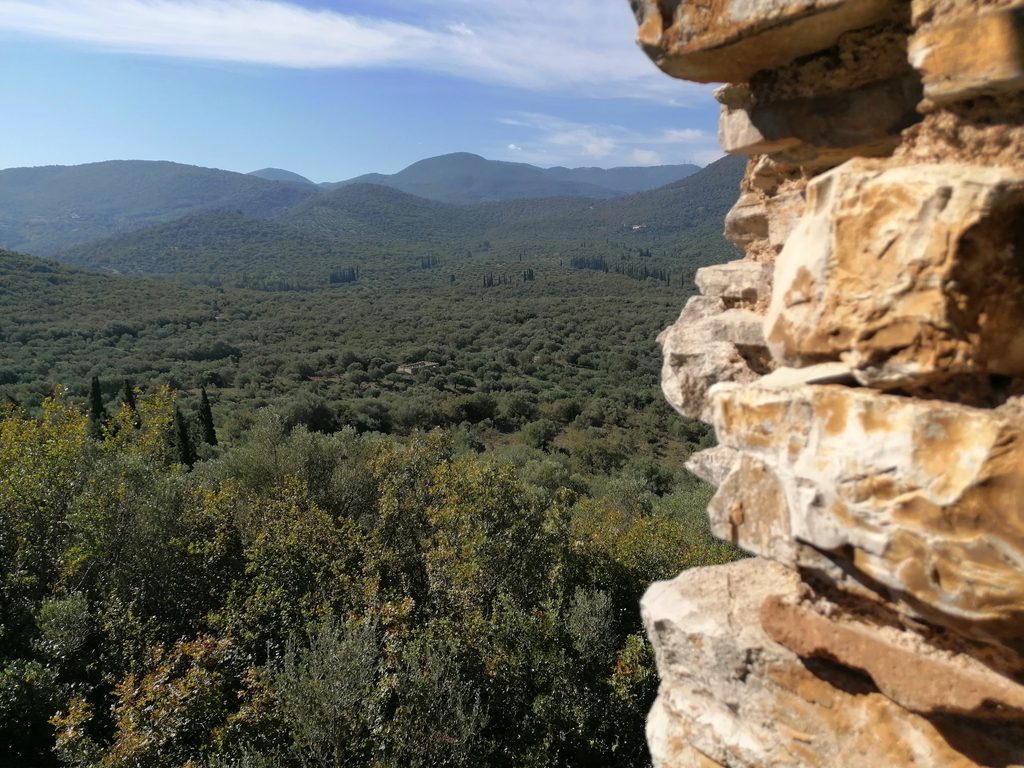
One of the highlights of a visit is the view. Despite the relatively modest height of the hill, the castle overlooks a large part of the surrounding countryside.
To the north, the view reaches towards the mountains of Arcadia, while towards the Messenian plain the distinctive hill of Ancient Ithome can be seen. Olive groves and Mediterranean vegetation stretch across the landscape surrounding the castle.
From this vantage point, it is easy to understand why the site was chosen for a fortification: it offered control over both the northern part of the plain and the natural routes leading towards Arcadia.
Visiting Mila Castle
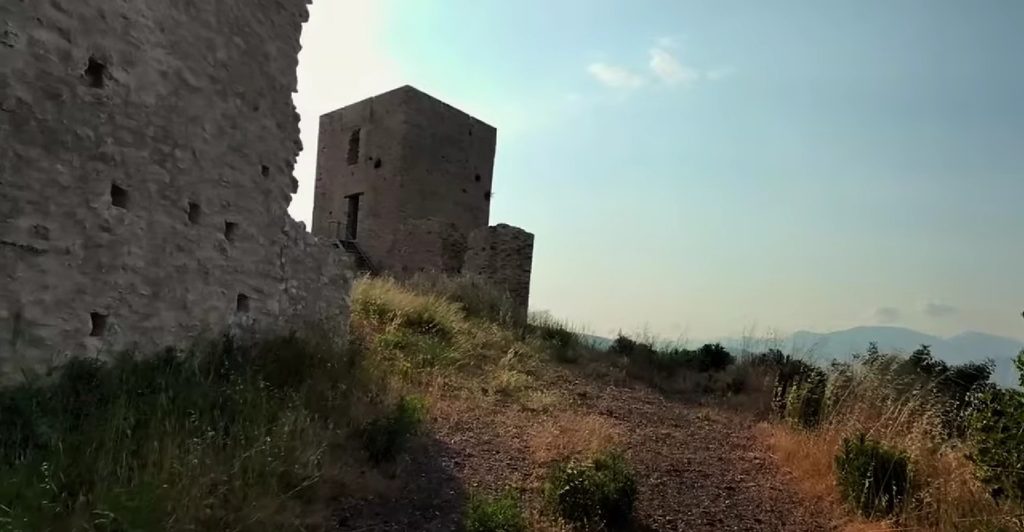
The castle is open and accessible inside, and information panels within the site provide details about its history, architecture and restoration.
A visit requires little preparation. If you approach by car, only around 300 metres of walking remain before reaching the castle.
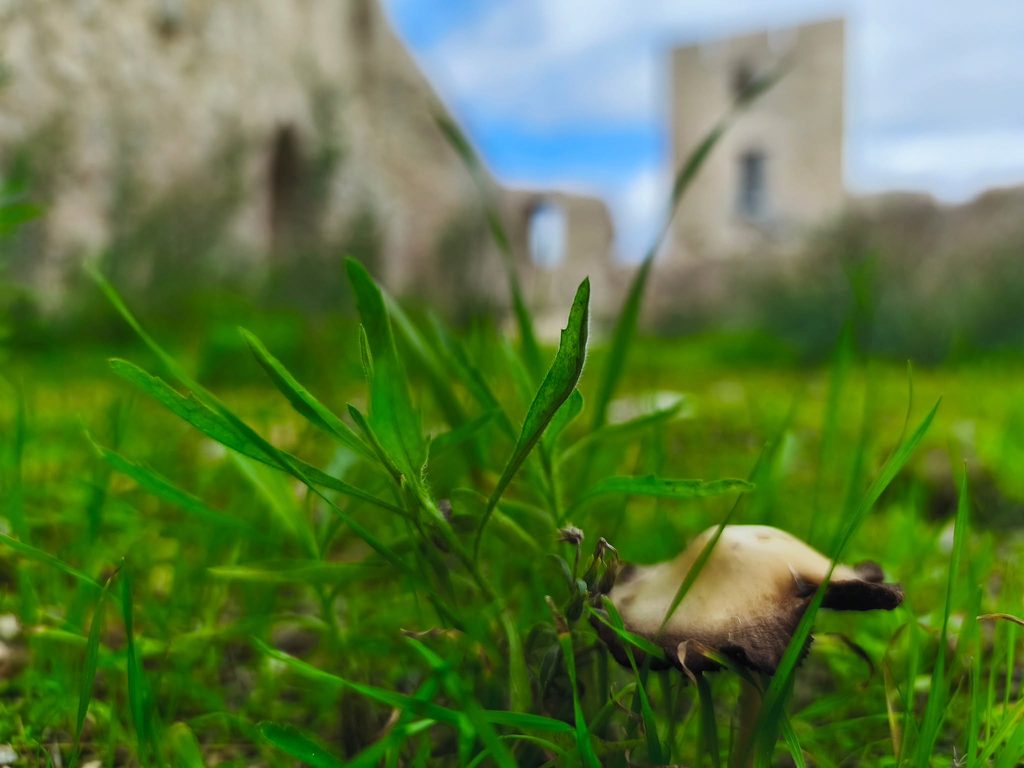
For those who would like to combine the visit with an easy hike, however, the route from Vasiliko is the more interesting option. Walking through the olive groves and stopping at Vrachopanagitsa can easily become an enjoyable part of the visit in its own right.